
July 23, 2024 – CM Venture Capital Team A Chinese startup has developed a non-toxic transparent alternative for touch screens. This nanofilm can also boost the performance of solar panels.
If you are reading this article, your fingers are most likely in contact with a conductive glass screen coated with ITO (indium tin oxide).
Glass itself is not electrically conductive. When your finger touches an ITO-treated screen, it alters the electric field, allowing the phone’s chip to detect the position of your finger. The conductive layer senses your touch and enables the smartphone to recognize which app or function you are activating.
Electrical conductivity underpins the functionality of all our technologies — a straightforward property for metallic materials. However, imparting conductivity to transparent materials such as glass or plastic poses a major technical challenge.
Currently, mainstream touch screen technologies on the market include ITO, silver nanowires and metal mesh. These manufacturing solutions are either complex (multi-layered), feature visible nanowires, contain toxic substances, or carry very high production costs. Their light transmittance ranges from 88% to 91%, with ITO delivering the lowest transmittance. The glass used in iPhones has a transmittance of 88%.
First and foremost, ITO is a toxic chemical. Animal studies have shown that ingestion of indium tin oxide causes poisoning and inflicts adverse effects on the kidneys, lungs and heart. A new occupational hazard known as "indium lung disease" has been identified. The first documented case involved a worker engaged in wet grinding of ITO surfaces, who developed interstitial pneumonia with ITO particles accumulated in the lungs.
A Chinese startup has created a non-toxic transparent alternative for touch screens: a nanoscale silver layer sandwiched between two nano-thin substrates such as plastic. It is non-toxic, features ultra-low surface resistance (more than ten times lower than ITO), exceptional light transmittance, low haze and high flexibility, with a broad range of applications. With the silver layer measuring only a few nanometers thick, it achieves an impressive 91% transmittance. In fact, the material is so transparent that it is barely visible.
Beyond touch screen applications, different formulations of this highly transparent nanofilm, produced via metal physical vapor deposition (PVD) technology, can improve the efficiency of solar panels, enhance display performance, and boost energy efficiency in buildings and automobiles by blocking infrared radiation.
This breakthrough material was further developed by Professor Lingjie Guo, a renowned nanotechnology expert at the University of Michigan, with funding from the Beijing Institute of Collaborative Innovation (BICI). An innovative enterprise was incubated under the auspices of the University of Michigan and BICI. Professor Guo developed a multi-element alloy formula for co-sputtering targets and a sputtering process — a method for depositing thin films onto substrates — that avoids the island-like dispersion structure commonly seen in PVD silver deposition, resulting in uniform, stable and smooth films. Professor Guo has published this research in top international journals including Science Advances, Nature Communications and Advanced Materials.
Headquartered in Beijing, nano conductive material company Zenithnano has secured the technology license from the University of Michigan. Dr. Patrick Berbon and Dr. Min Zhou, founders of CM Venture Capital, were deeply impressed when they saw a pilot-scale sample in 2019. As the sole investor, CM Venture Capital injected RMB 30 million (approximately USD 5 million) in seed funding into the startup to advance the commercialization of the technology. Having evaluated dozens of startups in the ITO replacement space prior to this, they immediately recognized how unique and elegant Zenithnano’s material solution was. This sole seed investment from CM Venture marked the start of the company’s commercialization journey.
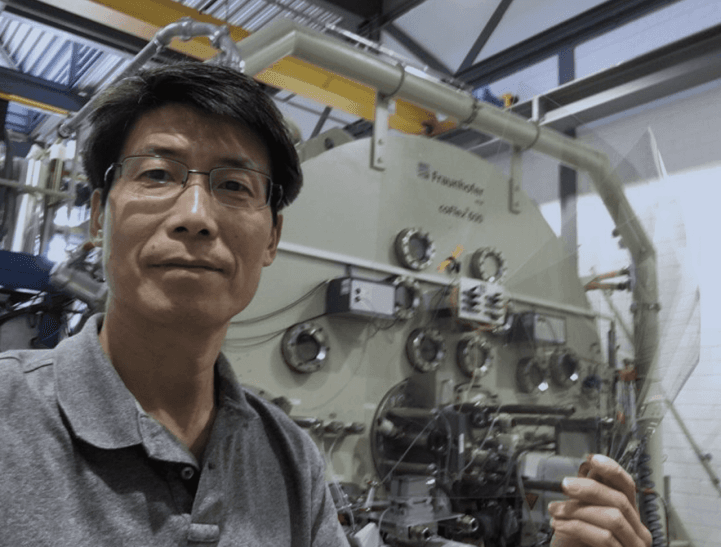
Professor Guo held an A4-sized specimen cut from a 100-meter-long roll produced by Fraunhofer. The specimen is exceptionally transparent and is only visible upon close inspection.
Today, this material is manufactured at Zenithnano’s 19,700-square-meter plant in Guangzhou, China. This transparent, flexible conductive nanomaterial is fabricated on the world’s most advanced roll-to-roll magnetron sputtering production line and serves a broad range of applications. Compared with silver nanowire and metal mesh alternatives, Zenithnano’s conductive film features a simpler roll-to-roll manufacturing process, which translates to lower costs and more competitive pricing.
Technological and Environmental Impacts of This Breakthrough Nanofilm
1)Flexible transparent electrodes for touch screens and electrochromic windows As a type of transparent conductive electrode, Zenithnano’s transparent nanofilm measures merely 7 nanometers in thickness, while the ITO layer on a standard iPhone glass screen exceeds 100 nanometers. Unlike brittle ITO, this material is flexible and bendable, making it ideally suited for next-generation foldable screens or large-format touch screen TVs. It can be applied to touch displays, electrochromic windows, perovskite solar panels and other products.
Zenithnano’s electrode film can replace ITO in touch screens, enabling slimmer and more flexible product form factors with 10 times higher conductivity and superior overall performance. When integrated into electrochromic windows for buildings and vehicles, this transparent electrode helps reduce reliance on air conditioning and substantially cut carbon footprints at scale.
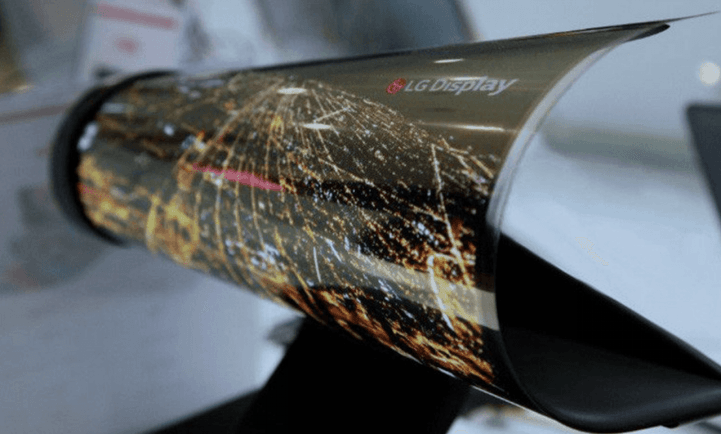
2) Oxygen and moisture barrier to eliminate solar panel failures Owing to Zenithnano’s “nanofilm sandwich” structure, which typically encloses a proprietary metal alloy between other thin film layers such as dielectric materials, the adjustment of these layers can deliver a premium oxygen and water vapor barrier for quantum dot (QD), N-type and perovskite solar panels that are continuously exposed to sunlight and rain.
This is of critical importance, because perovskite — the core material responsible for converting light into energy — becomes unstable in humid environments, which may cause solar panel failure. Boasting high transparency and superior moisture resistance, this nanomaterial is exceptionally effective for QD thin films, and enables QLED TV screens to maintain clarity, sharpness and brightness over an extended service life.
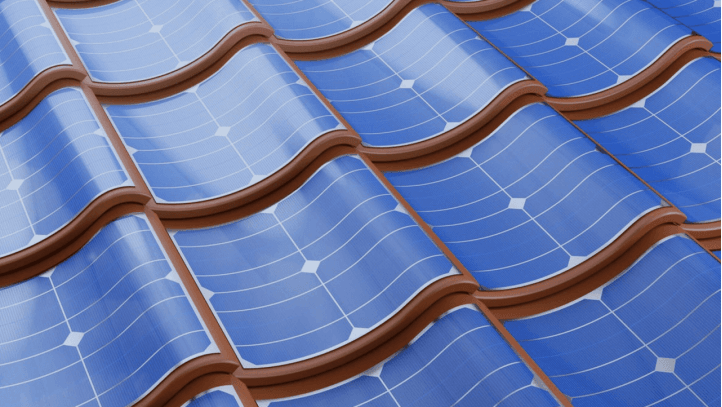
3)Improving solar panel performance by reflecting light and heat Solar power requires steady light input to function efficiently, and the direction of sunlight shifts with the Earth’s rotation. When engineered and applied to the front side of solar panels, Zenithnano’s nanofilms deliver dual benefits: they filter out ultraviolet radiation to prolong the service life of solar cells; when applied to the back sheet, they reflect light back into the solar panel. Mirrors or polished metals are not commonly used in these scenarios, as they are either brittle, heavy, or prohibitively expensive. As light reflectors, specially calibrated nanofilms can also serve as reflective surfaces for laser projection TVs — essentially ultra-short-throw projectors — blocking ambient light while maintaining sharp visual performance. The nanofilms block both ultraviolet and infrared radiation, making them an ideal window film for buildings and vehicles: the material reflects 90% of infrared rays without obstructing visible light, thus reducing dependence on energy-intensive HVAC systems.
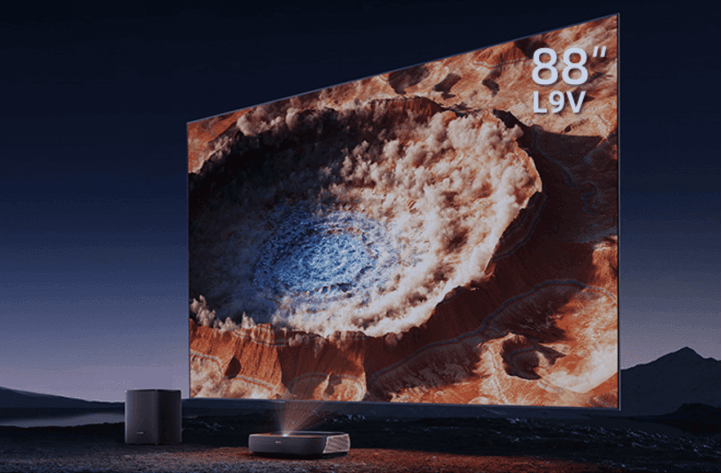
Example of Laser TV (Hisense 88-inch Laser TV)
When assessing the efficiency of solar energy systems, please consider China’s green innovations.
https://globalventuring.com/corporate/industrial/innovation-china-an-invisible-nanofilm-breakthrough-for-touchscreens/